In the highly competitive roofing industry, closing a deal often comes down to speed and credibility. Homeowners rarely wait around for a week to get a quote. If you can’t provide an estimate quickly, your competitor will.
Traditionally, writing a bid required driving to the location, setting up a ladder, climbing onto the roof, and manually running tape measures across ridges, rakes, and valleys. This process was time-consuming, dangerous, and prone to simple measurement errors.
Bypassing the Ladder
Aerial roof reports have completely disrupted this old workflow. By utilizing high-resolution oblique aerial photography and specialized vector analysis software, contractors can now pull accurate roof dimensions in minutes without ever leaving their desk or truck.
“With rapid 30-minute delivery, a sales representative can order a report on the way to a customer site and have full dimensions in hand by the time they knock on the front door.”
The Benefits of Speed in Sales
Having certified measurements ready during your first consultation provides three distinct business advantages:
- Increased Close Rates: Presenting an immediate, professional, and transparent estimate prevents the homeowner from shopping around.
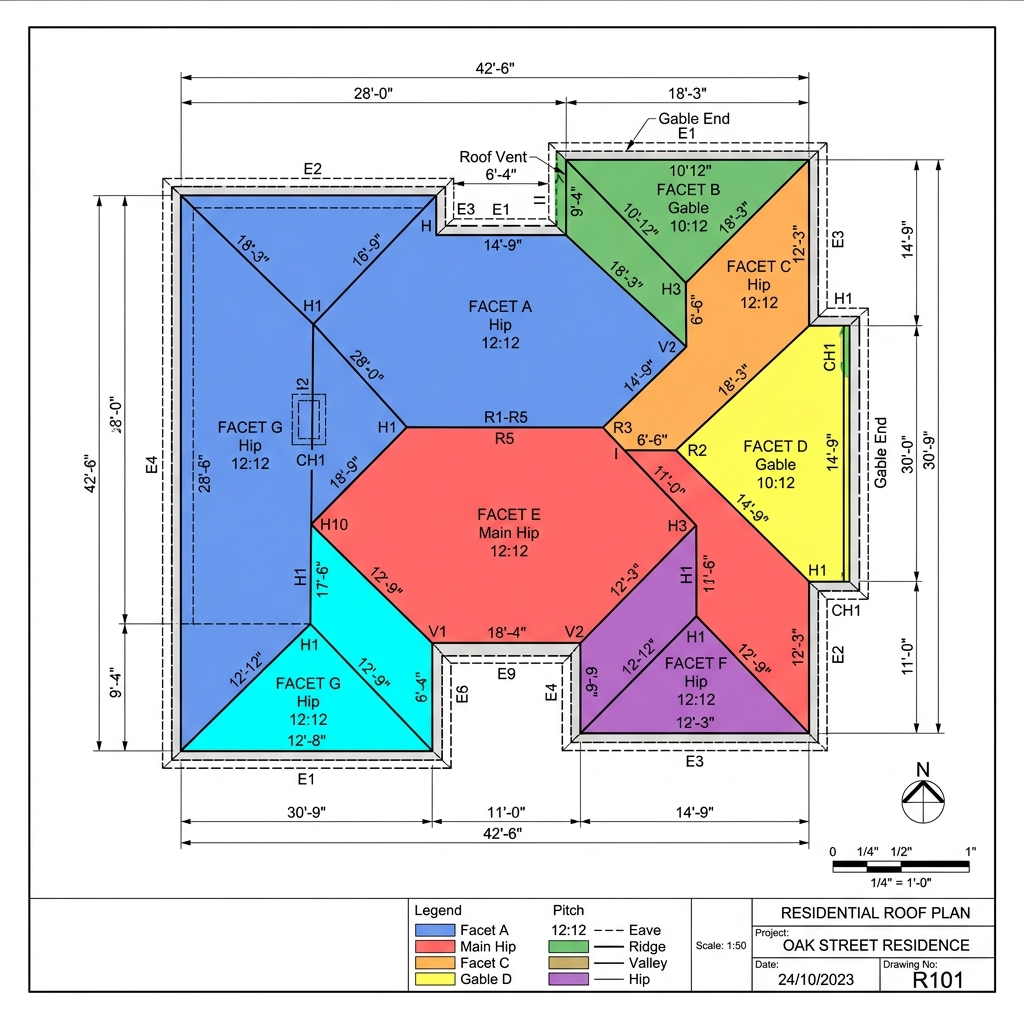
- Enhanced Professionalism: Handing a client a clean, color-coded PDF dimension sheet builds instant trust. It shows you rely on modern technology and verified statistics, not rough guesses.
- Eliminated Estimate Disputes: Having exact lengths for ridges, valleys, and rakes prevents conflicts with insurance adjusters and ensures correct material order sheets.
Integrating ESX Files
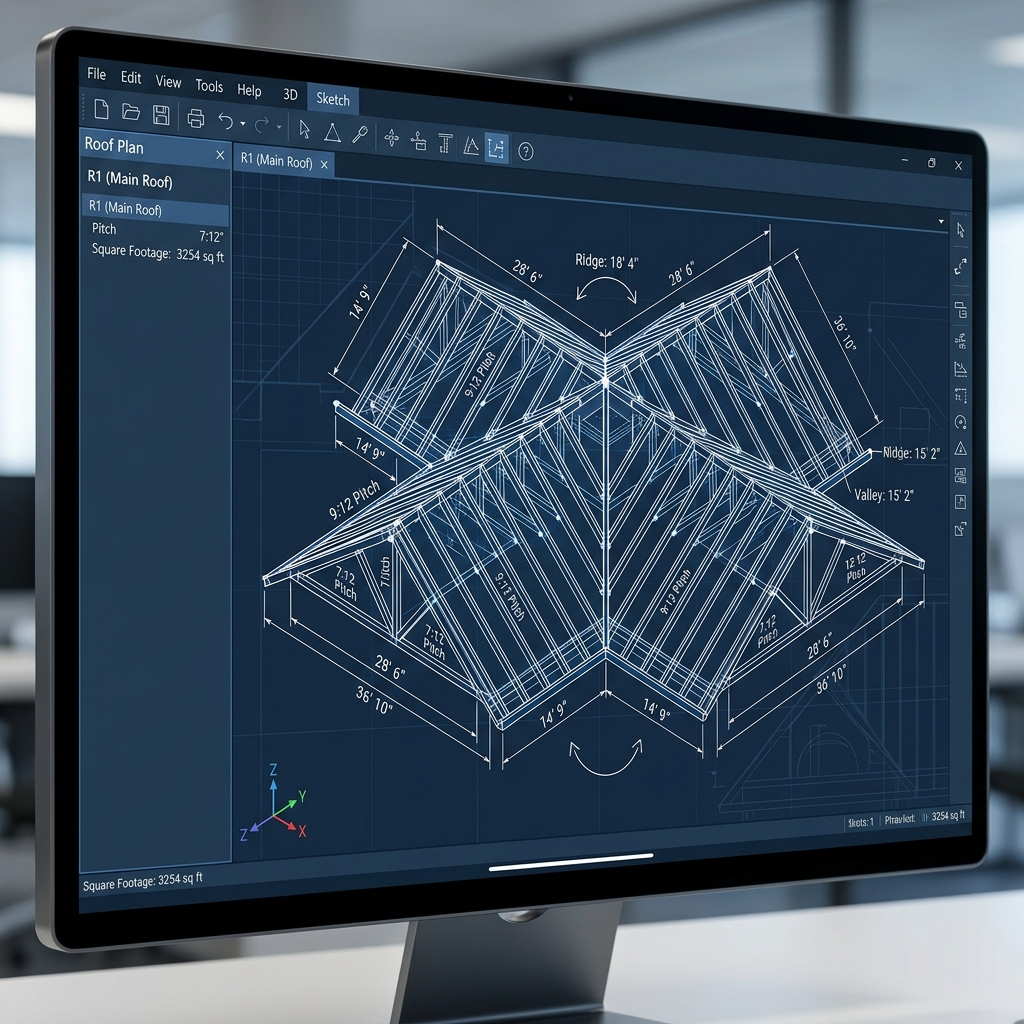
For contractors using Xactimate, the efficiency gains are even larger. Ordering an ESX sketch file means you can import the entire three-dimensional roof model directly into your estimating software. Facets, structures, and lines are pre-tagged, reducing sketch time from hours to seconds.
Ultimately, transitioning to aerial measurements isn’t just about saving time on a ladder—it is a strategic decision that increases estimating throughput, lowers liability, and drives higher closing margins.